Home » Posts filed under Windover Hill
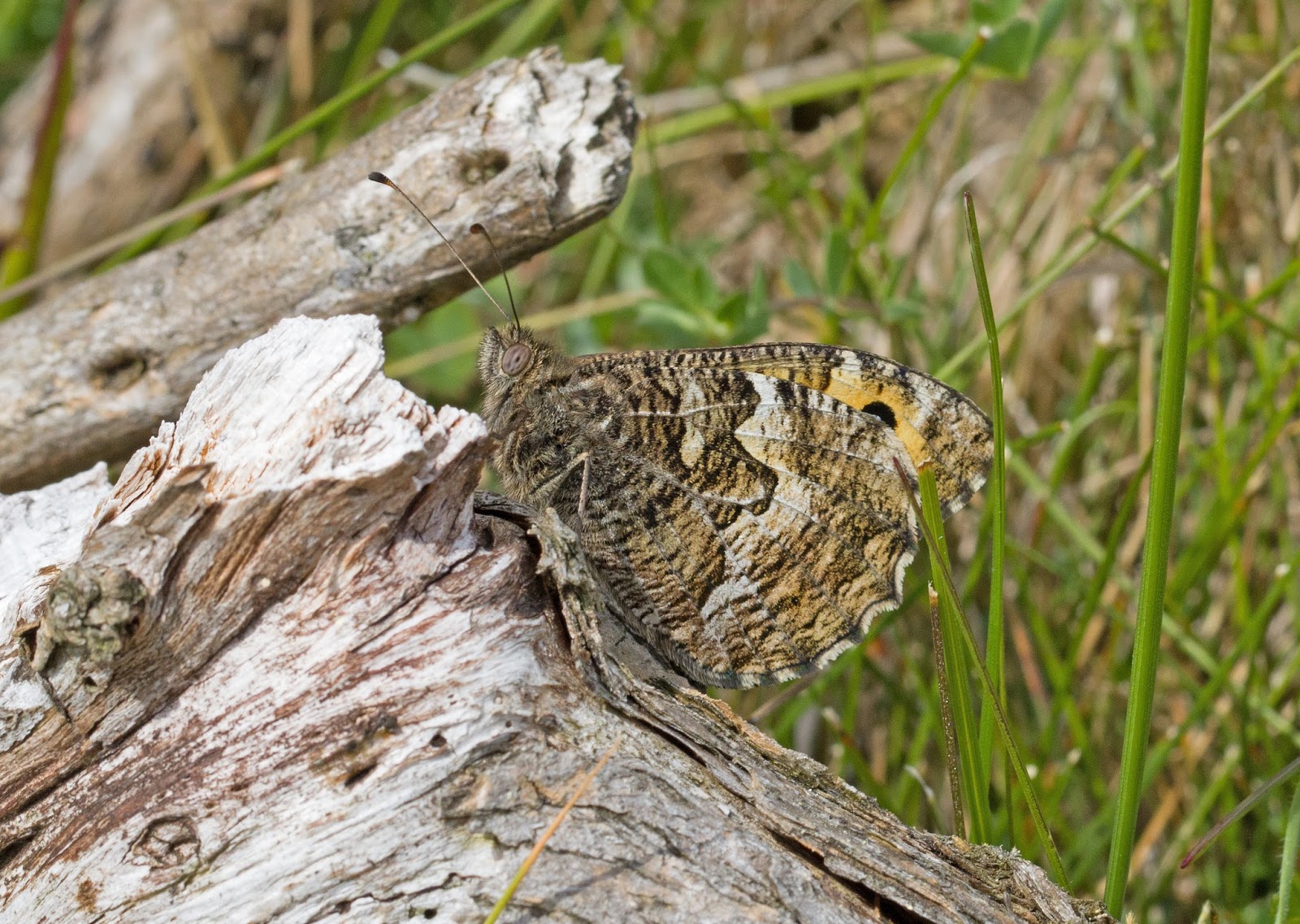
Around this time of year the butterfly season slowly winds down and there is always a bit of a gap before the autumn migration gets underway. So today was a trip out on the South Downs, ostensibly to see if I could get to grips with some Orthoptera but mostly to take the camera for a walk. Having read about Southern Water's project to re-introduce the Wart-biter to an ideal habitat at the Deep Dean water treatment plant I was keen to give it the once over. Not necessarily to find a Wart-biter but to understand the habitat and of course the possibility of a late Grayling to add to the season's tally.I can hear myself saying it, sat high in an alpine meadow, surrounded by butterflies - "We don't have anything like this at home". Today I was proved very wrong. When I parked off the road below Wilmington and started up the Col de Windover I was expecting to find the usual suspects, Meadow Browns, Chalk Hill Blues and even some Silver-spotted Skippers but not in the numbers present. There were literally thousands of Meadow Browns and Chalk Hill Blues, all in various states of wear and tear. The Silver-spotted Skippers were the big surprise, hundreds, no - many hundreds of specimens between the top of the hill and the bottom of the dean. Martin and I had witnessed 200 plus specimens at Newtimber hill and this surpassed that by a long way.I had arrived at 0900 and started up towards the reservoir, the south facing bank taking the early morning sunshine was already well populated with CHBs, predominantly males as I didn't see a female until at the reservoir itself. Just before the top there is a triangular patch of grass on the right hand side of the path, always a good bet for an SSS - and this time it was well populated. On up to the cattle drink and finally into the combe itself. A myriad of Meadow Browns dancing all over the south facing slope, I searched all the chalky rabbit hole aprons for a Grayling but it was a hopeless task, the place was overwhelmed with browns. |
| The season is coming to an end |
 |
| Some males not quite so worn |
 |
| Females showed in greater numbers later in the day |
 |
| That electric blue can only mean a second brood Adonis |
 |
| Plenty of other butterflies about |
I followed the path south west towards the water treatment plant, the habitat changing from the dry steep slopes to flower filled meadow. Great stands of Harebell,and Wild Marjoram attracting butterflies. This ground hasn't been sprayed with anything for years and the density of flowers is amazing. These combes can be very sheltered and therefore get extremely warm, so at the lower end I managed to find a breeze and sat and enjoyed a comfortable lunch. |
| Deep Dean |
 |
| Stunning wild flowers |
 |
| Harebells |
 |
| Wild Marjoram |
Scouting the area around the treatment plant gave me three great finds. First a fine Wasp Spider that I initially spooked but just a couple of minutes later it reappeared and posed well for the lens.Second was a very aggressive Hornet Robber Fly that had captured a bee, I tried to get close but it adopted a more aggressive pose and finally flew.Third subject was a huge Great Green Bush Cricket, at first, because of its size, I thought I had a WB but sadly not. It posed obligingly and I left it where I had found it.Of course it is pleasant to take a mile plus walk down hill, the downside was that I had to get back to the top.Just a few from last week, we did a circuit of Pagham and the juvenile Barn Swallows and Sedge Warblers on the North Wall were definitely worth recording. Sadly little else but it was nice to see an early Short-eared Owl that was spooked off the Church Norton Spit by a walker. It flew over the spit and out to sea and I failed to see it return.Finally a new garden tick butterfly, Purple Hairstreak. Obviously attracted by the honeydew from the Whitefly aphids that have infested our plum trees. The recent heavy rains have washed away most of the sticky substance but the Whiteflies remain, much to the delight of the Chiffchaffs and Willow Warblers that are passing through.One from some time ago, taken on Frensham Common, a Red-banded Sand Wasp, Ammophila sabulosa with prey.
Today's outing was a walk up Windover Hill in East Sussex, supposedly a search for Grayling, unfortunately they appear to be a little late this year. I diligently searched the area, where last year we found plenty on a date nearly a fortnight earlier, with no success. Never mind there was still much to be found and photographed. I was very pleased when a Silver-spotted Skipper photo bombed the recording of a fresh Chalkhill Blue. Plenty of other Skippers and Small Coppers on the wing, most of them looking fairly fresh too.A strong south westerly breeze wasn't helping so I gave up early - hope the weather is better tomorrow.A Large Skipper for comparison |
| Deep Dean - home of the Grayling |
When I took the Deep Dean photograph I was sat on a bit of an anomaly, Chalk Heath, a habitat that forms very locally when a shallow layer of sand or acid drift material overlies the chalk. Heather (Calluna vulgaris) and other calcifuges, plants that normally avoid calcareous soils growing in gay abandon.It is so interesting that Miss M Cheveley Rayner published an article about it called "The Ecology of Calluna Vulgaris" in 1912.
 |
| Wild Strawberry, Fragaria vesca - delicious |